
 EN
EN
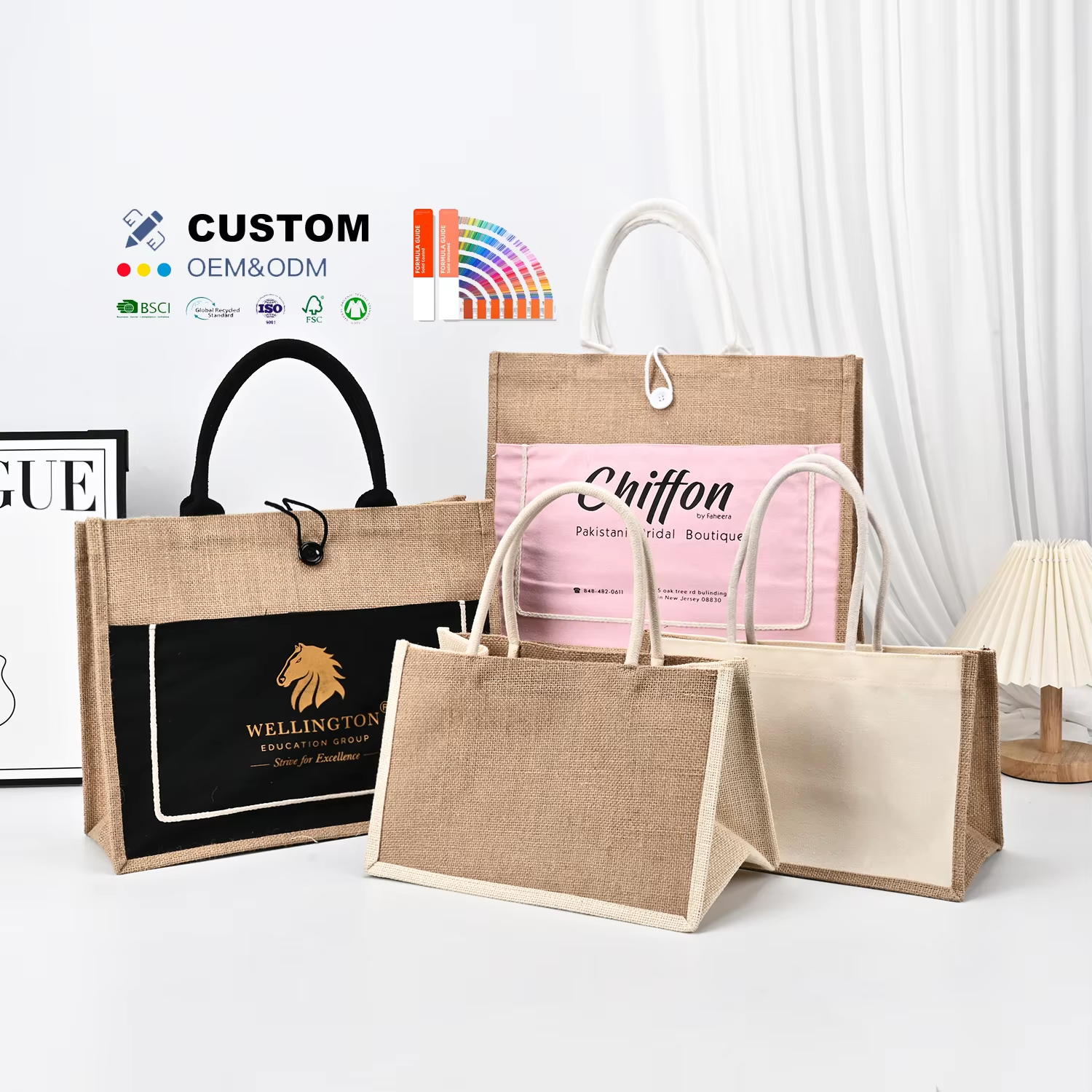
Key Physical & Safety Criteria for Premium Jute Bags
Weave Density, GSM, and Handle Material Integrity
For premium quality jute bags, there are certain physical standards they need to hit if we want them to last and stay safe during regular use. The weave density matters a lot for how resistant the bag will be to tearing. When manufacturers talk about weave density, they're basically counting how many threads fit into each square inch of fabric. A good rule of thumb is looking at 12x12 constructions which tend to hold up well against weights around 50 pounds without any fraying issues. Fabric strength gets measured in something called GSM or grams per square meter. Most retailers find that somewhere between 250 and 300 GSM works best because it gives enough structure while still allowing the bag to drape nicely on shelves. Handles deserve special attention too since they take most of the strain. Quality makers typically reinforce handles with either strong organic cotton webbing or braided jute material. These handles should be attached using triple stitching at key points where tests show they can survive over 200 lifting cycles even when subjected to normal wear and tear conditions.
Stitching Quality, Non-Toxic Linings, and Safe Finishing (Inks, Coatings)
When it comes to stitching quality, there's no room for compromise. High end bags typically feature around 8 to 10 stitches per inch, and important areas like gussets and where handles attach get extra reinforcement with double or even triple stitching. This prevents those annoying seam failures that nobody wants when carrying something heavy. For linings, manufacturers need to stick with either food grade polypropylene or bamboo blends that have passed the OEKO-TEX Standard 100 certification process. These materials ensure customers aren't exposed to harmful stuff like heavy metals, formaldehyde, or allergic reaction causing dyes. And let's talk about finishes. The best companies now use only water based inks and coatings made from plants. Industry tests show these eco friendly options slash VOC emissions by about 90% compared to traditional plastisol alternatives. Plus they hold their colors well even after lots of handling and sitting in sunlight for extended periods.
Trusted Eco-Certifications for Jute Bags: What Retailers Must Verify
GOTS, OEKO-TEX® Standard 100, and Fair Trade — Prioritizing Relevance to Retail Brand Values
Third-party certifications are essential trust signals in today’s sustainability-driven market, where 73% of consumers adjust purchasing behavior to support verified eco-conscious brands (Venuez 2024). For jute bags, three certifications carry distinct but complementary weight:
- GOTS (Global Organic Textile Standard) confirms organic fiber origin and ethical processing across the full value chain—from jute harvest through spinning, weaving, dyeing, and finishing.
- OEKO-TEX® Standard 100 provides independent lab validation that every component—including threads, linings, inks, and adhesives—meets strict human-ecological safety thresholds.
- Fair Trade certification ensures living wages, safe working conditions, and community investment—not just for factory workers, but also for smallholder jute farmers in Bangladesh and India.
Together, these credentials form a holistic assurance framework: 85% of buyers now cite such labels as decisive factors when evaluating environmental claims (Venuez 2024), making them indispensable for brand credibility.
Why ISO 14001 Validates Supplier Environmental Responsibility — Not Just Product Claims
While product-level certifications verify what’s in the bag, ISO 14001 assesses how it’s made. This internationally recognized standard evaluates a supplier’s environmental management system—not individual products—but operational rigor across waste streams, energy sourcing, effluent control, and continuous improvement planning.
| Certification Scope | Key Validation Points |
|---|---|
| Product-Level (e.g., GOTS, OEKO-TEX®) | Fiber origin, chemical safety, social compliance |
| Supplier-Level (ISO 14001) | Measurable reductions in water use, fossil fuel dependency, and hazardous waste generation |
Retailers who prioritize ISO 14001-certified suppliers gain assurance that environmental responsibility is embedded in daily operations—not limited to a single batch or label—significantly reducing greenwashing exposure across their jute sourcing program.
Jute Bag Sustainability in Context: How It Compares to Alternatives
Lifecycle Edge: Carbon Sequestration, Low Water Use, and Certified Biodegradability vs. Plastic, Cotton, and PP
When it comes to environmental impact, jute stands out as something special because it actually gives back more than it takes throughout its entire life cycle. Let's look at what makes jute so different from other materials. For starters, when grown properly, jute plants soak up carbon dioxide as they grow. We're talking about around 15 tons of CO2 absorbed per hectare each year, plus they help make the soil healthier too. Compare that to regular plastic bags made from polypropylene, which create about 1.1 kg of CO2 just in production alone, and offer zero benefits once discarded. Water usage tells another story worth noting. Jute farming depends mostly on seasonal rains, needing only between 100 and 150 liters of water to produce one bag. That's way better than cotton, which guzzles over 2,500 liters for the same amount. And then there's what happens after we throw them away. Real certified jute breaks down completely in soil within 3 to 6 months, giving back nutrients naturally. Plastic bags tell a very different tale though. They stick around for hundreds of years and eventually break down into tiny pieces that harm our ecosystems.
| Material | Carbon Footprint | Water Consumption | Biodegradation Timeline |
|---|---|---|---|
| Jute | Net negative (sequesters CO) | 100–150 liters | 3–6 months |
| Cotton | ~10 kg CO per bag | 2,500+ liters | 5–6 months |
| PP/Plastic | 1.5 kg CO per bag | Minimal (but fossil-derived) | 500+ years |
This combination—carbon capture, ultra-low water demand, and rapid, non-toxic decomposition—makes jute the only widely available bag material with demonstrable net ecological benefit, validated by peer-reviewed textile lifecycle assessments. Retailers seeking science-backed sustainability should treat this triad as a threshold criterion—not a differentiator.
Brand-Forward Customisation: Ensuring Jute Bags Elevate Retail Identity
Logo Durability Testing — Print, Embroidery, and Colorfastness Across 50+ Washes & UV Exposure
How long a brand stays relevant really matters for return on investment. When logos start fading, people just don't see the same quality anymore, and that hurts what the brand is worth overall. These premium jute bags go through some serious testing for durability. The screen printed designs can handle over 50 industrial washes without any cracks or peeling. Embroidered logos are put through their paces too, standing up to tension tests with weights of around 15kg to check if the threads stay securely in place. Colors get tested against UV light for more than 500 hours total, which simulates about 18 months of being displayed outside in stores, and we measure how much they fade compared to standard Pantone colors. The waterproof coatings also face simulated wear from carrying the bag every day for two whole years, making sure the prints stay clear and the finish doesn't break down during normal use.
On-Trend Aesthetic Alignment: Boho-Chic, Minimalist, and Geometric Styles for Target Audiences
When it comes to design strategy, knowing who we're talking to matters way more than chasing whatever's hot right now. Take boho-chic for example these days. Those flowy pieces with all those hand drawn plant designs, warm colors like terracotta and olive green, plus those little tassels everywhere? They really click with young people worried about sustainability issues. We've seen stores see around a third boost in customer interest when they stock these kinds of items. On the flip side, minimalist looks work wonders for upscale brands looking to stand out without shouting too loud. Think clean lines, simple shapes made from natural materials, and logos that don't scream for attention. Then there's the younger crowd loving those sharp geometric prints with lots of contrast between dark and light areas. These designs tend to get shared quite a bit online, especially on platforms like Instagram where visuals matter so much. Before anything hits shelves though, most companies run their concepts past real customers first. This helps make sure what gets produced actually connects with people culturally instead of missing the mark completely. At the end of the day, good design isn't just about looking pretty it needs to tell a story that makes sense to whoever sees it.